How Many Landscape Lights Does a Houston Home Really Need?
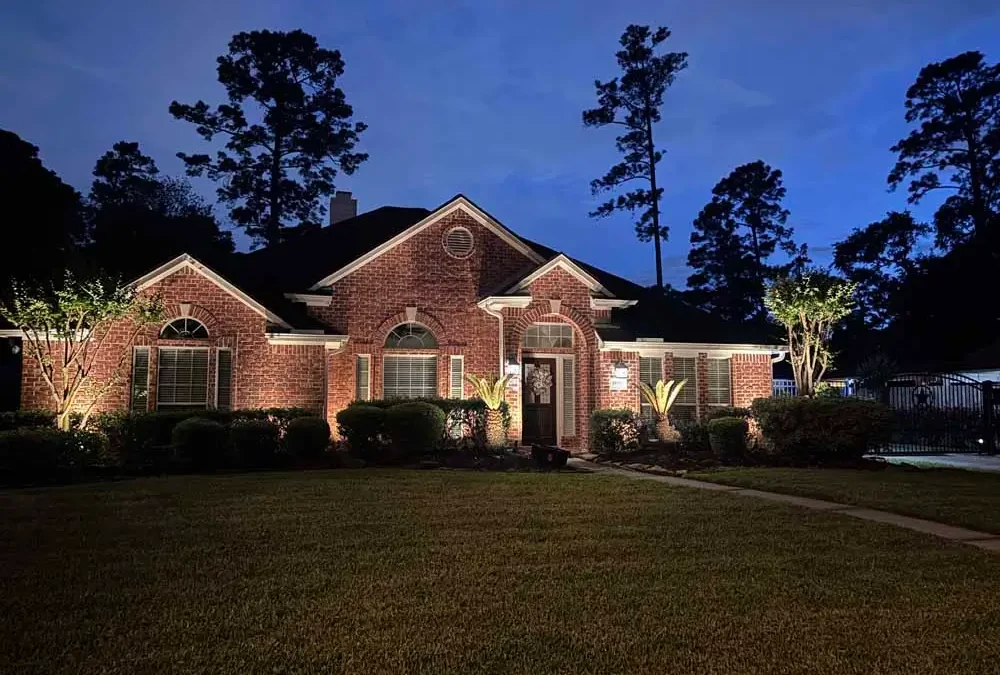
Landscape lights for a Houston home should be planned around the property’s architecture, landscaping, outdoor living areas, and the way the homeowner uses the space after dark.
So, how many lights does your home need?
There is no honest one-size-fits-all answer.
A smaller home with a simple front yard may need a focused group of fixtures. A large property with mature trees, a long driveway, a pool, an outdoor kitchen, and several garden beds may need dozens.
The right number becomes clear after we understand what you want the lighting to accomplish.
At Houston Lightscapes, we design each system around the property. We look at the home, the landscape, the dark areas, the important features, and the places people need to walk. Then we determine how many fixtures are needed to create a balanced result.
Every light should have a job.
The Size of the Home Does Not Tell the Whole Story
Homeowners sometimes expect lighting companies to estimate fixture count based on square footage.
Square footage gives us very little information about the outdoor lighting design.
Two homes can be the same size and need completely different systems.
One home may sit close to the street with a short walkway and a few small trees. The other may have a deep front yard, a circular driveway, tall oak trees, several columns, and detailed brickwork.
The second property will likely need more lighting, even though the homes have the same square footage.
The shape of the house matters too. A wide one-story home may require several fixtures to create even coverage across the front. A two-story home with tall peaks may need fixtures with different beam spreads and angles.
We consider the property as a complete nighttime view.
Start With the Goal of the Lighting
The first question should be about your goals, not the number of fixtures.
What do you want the lighting to do?
Some Houston homeowners mainly want better curb appeal. They want the front of the house to look warmer and more finished when they pull into the driveway at night.
Others want to use a patio, pool, outdoor kitchen, or backyard seating area after sunset.
Safety may be the main concern. Dark steps, uneven walkways, driveway curves, gates, and side yards can be difficult to see at night.
Many homeowners want a combination of these benefits.
Your goals help us decide which areas need light and which areas can remain darker. That gives the design contrast, depth, and a more natural appearance.
Architectural Features Affect Fixture Count
Houston homes come in many styles. We work with brick homes, stucco homes, modern homes, traditional homes, ranch-style properties, and large estate homes.
Each style requires a different lighting approach.
A home with columns may need individual fixtures placed near the base of each column. Stonework may need a wider beam that shows the texture without washing out the surface. Tall roof peaks may need stronger, carefully aimed fixtures.
Architectural features that may affect fixture count include:
- Columns and arches
- Brick or stone walls
- Roof peaks
- Balconies
- Entryways
- Gables
- Large windows
- Garage doors
- Courtyard walls
- Decorative trim
We do not need to light every feature.
The best results usually come from choosing the strongest architectural details and allowing the rest of the home to support them.
Trees and Landscaping Can Require Several Types of Light
Mature trees are common throughout many Houston neighborhoods. Large live oaks, palms, crepe myrtles, and other trees can become major parts of the nighttime design.
A single small tree may only need one carefully placed fixture.
A large oak may need several.
One fixture can highlight the trunk. Another can show the spread of the branches. A fixture placed higher in the tree may create soft moonlighting across the lawn or driveway.
The goal determines the count.
Landscape beds also affect the design. Dense shrubs may block light. Large plants may need wider spacing. Garden beds with several layers of plants may need more than one lighting angle to create depth.
Houston plants grow quickly during the warmer months. A fixture that works today may become blocked as shrubs and ground cover grow. We account for plant size, growth patterns, and future maintenance when planning the system.
Professional landscape lighting design helps the fixtures work with the landscaping instead of getting lost behind it.
Walkways, Steps, and Driveways Need Practical Lighting
Safety lighting needs to be useful without making the yard look like a runway.
Path lights can help mark walkways, turns, steps, and changes in elevation. Yet placing one fixture every few feet can make the yard feel crowded.
Good path lighting uses spacing, beam spread, and nearby landscape features to guide people naturally.
Driveways may need lighting near:
- The street entrance
- Gates and columns
- Sharp curves
- Parking areas
- Walkway connections
- Garage entrances
- Changes in grade
A short, straight driveway may need very little added lighting. A long or curved driveway may require several lighting points.
The same rule applies to steps. A single set of steps may only need one or two carefully placed fixtures. A larger staircase or terraced walkway may need a more detailed plan.
Outdoor Living Areas Add More Lighting Zones
A backyard can have several separate areas, and each one has a different job.
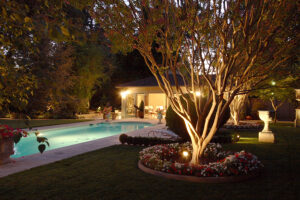
The patio needs enough soft light for conversation and dining. An outdoor kitchen needs practical task lighting. Pool areas need clear visibility near steps, edges, and walking surfaces. Trees and gardens need accent lighting to create depth beyond the seating area.
These areas should feel connected.
Lighting only the patio can make the rest of the yard look like a dark wall. Lighting only the trees can leave the places where people sit and walk too dim.
A layered design may include:
- Patio lighting
- Step lighting
- Tree lighting
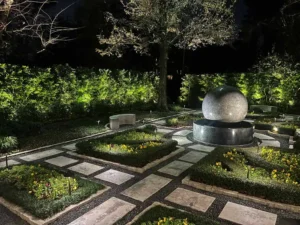
- Garden lighting
- Pool-area lighting
- Pergola lighting
- Outdoor kitchen lighting
- Moonlighting
- Accent lighting on walls or water features
The fixture count grows as more outdoor areas are included in the project. That is why a full-property system usually requires more lights than a front-elevation project.
Fixture Type Matters as Much as Fixture Count
Ten lights can produce very different results depending on the fixtures, bulbs, beam spreads, and placement.
A narrow spotlight focuses on a specific column, tree trunk, or architectural feature. A wider flood spreads light across a wall, garden bed, or large tree canopy. A path light directs light downward across a walking surface.
Brightness matters too.
A high-output fixture may cover more area, but it can also create glare and harsh hot spots. Several lower-output fixtures may provide better control and a softer appearance.
We generally use warm LED lighting because it works well with brick, stone, stucco, wood, plants, and trees. Warm light also creates a more comfortable look around patios and entries.
A well-designed system uses the right fixture for each job instead of trying to solve every problem with the same light.
Too Many Lights Can Make the Property Look Flat
Adding more fixtures does not always improve the design.
Outdoor lighting needs darker areas. The contrast between light and shadow gives the property depth.
When every wall, shrub, and tree receives the same amount of light, the yard can look flat. Fixtures may compete with each other. The home loses its natural focal points.
Too many fixtures can also cause:
- Glare near windows
- Bright spots on walls
- Light shining into seating areas
- A cluttered appearance during the day
- Light spilling onto neighboring properties
- Higher installation and maintenance costs
Poorly placed or excessive outdoor light can also contribute to light pollution.
Our goal is to use enough light to create the desired effect while keeping the design soft, controlled, and balanced.
Too Few Lights Can Leave the Design Feeling Unfinished
Using too few fixtures creates a different set of problems.
One tree may glow brightly while the rest of the yard disappears. The front door may look welcoming, but the walkway leading to it remains dark. The patio may have plenty of light while the pool and surrounding landscape feel disconnected.
These dark gaps can make a lighting system look incomplete.
A good design creates visual connections.
The driveway should lead the eye toward the house. The walkway should connect with the entry. The patio should relate to the trees and gardens beyond it.
The fixtures do not need to form a straight line. They need to work together.
Your Budget Helps Shape the Lighting Plan
Fixture count affects the total project cost, so budget is part of the design conversation.
We can help you decide which areas should receive priority.
For one homeowner, the front elevation and entry may matter most. Another homeowner may care more about the patio, pool, and backyard. A larger property may need a complete plan that can be installed in stages.
Planning matters when a project is completed in phases. The transformer, wiring, fixture locations, and future lighting zones should be considered before the first part is installed.
That helps prevent unnecessary rework later.
We design around your goals and budget. The purpose is to create a system that feels complete, even when we focus on a specific part of the property first.
How We Determine the Right Number of Lights
We begin with a consultation and a walk around the property.
We ask how you use the home. We look at the areas that feel too dark. We identify architectural details, trees, gardens, walkways, patios, pools, and other features that deserve attention.
Then we build a custom lighting plan.
We consider:
- Fixture type
- Beam angle
- Light output
- Color temperature
- Viewing direction
- Plant growth
- Wiring routes
- Transformer capacity
- Glare control
- Future expansion
After installation, we review the system at night.
This step matters because outdoor lighting should be judged after dark. We can adjust fixture angles, brightness, and positioning once we see how the full property works together.
A small adjustment can make a big difference.
Frequently Asked Questions About Landscape Light Counts
Is there an average number of landscape lights for a house?
There is no standard number that works for every home. Fixture count depends on the size and shape of the property, the features being lit, the homeowner’s goals, and the type of fixtures used.
Can I light only the front of my home?
Yes. Many homeowners begin with the front elevation, entry, driveway, and walkway. A focused front-yard design can improve curb appeal and make the property easier to use after dark.
Does every tree need its own light?
No. We select trees based on their size, shape, location, and importance to the overall design. Some trees need one fixture. Large trees may need several. Other trees may remain unlit to preserve contrast.
Can landscape lighting be installed in phases?
Yes, many systems can be planned in phases. The transformer, wiring, and future fixture locations should be considered during the original design so new zones can be added more easily.
How do I know if my yard is overlit?
Common signs include glare, bright hot spots, light shining into windows, fixtures placed too close together, and every area receiving the same brightness. A balanced design includes both light and shadow.
Bottom Line on How Many Landscape Lights You Need
The number of landscape lights your Houston home needs depends on what you want to see, where you spend time, and how the property is laid out.
A smaller system may focus on the entry, walkway, and strongest architectural features. A full-property design may include trees, gardens, driveways, patios, pools, and outdoor living areas.
The right fixture count is the number that gives every light a clear purpose.
At Houston Lightscapes, we bring more than 30 years of outdoor lighting experience to each project. We design custom systems using quality fixtures, careful placement, and a nighttime review to make sure the final result feels warm, useful, and balanced.
Contact us to schedule a free consultation and find out how many landscape lights your Houston home really needs.
Houston Lightscapes

The team at Houston Lightscapes takes pride in their many years of experience in the landscape lighting industry. They've been serving the greater Houston area for over 30 years bringing innovation and elegance to their designs. Learn more about Houston Lightscapes here.