Professional Landscape Lighting Cost in Houston – What you need to know
The cost of professional landscape lighting in Houston depends on the size of the property, the areas being lit, the fixtures used, and the amount of installation work involved. A front entry with a few trees is one type of project. A full property with a long driveway, mature landscaping, a pool, and several outdoor living areas is another.
There is no honest way to price both from a fixture count or a few photos.
We need to see the home after talking with the homeowner. Where does the property feel too dark? Which features deserve attention? Are people walking from the driveway to a side door at night? Does the backyard need enough light for dinner by the pool, or is the goal a softer view from inside the house?
Those answers shape the design. The design shapes the price.
Houston Lightscapes creates outdoor lighting plans for the home in front of us. We look at the architecture, landscaping, access, existing equipment, and the way each area is used. That gives the homeowner a much clearer idea of what the project will include and what it will cost.
Start With the Areas You Want to Light
Most homeowners already have a few problem areas in mind.
The front of the house disappears after sunset. The walkway from the driveway is hard to see. A large oak tree looks beautiful during the day and turns into a dark shape at night. The patio is comfortable until dinner runs late and everyone reaches for a phone flashlight.
Walk the property after dark before meeting with a lighting designer. Notice where you slow down, where guests enter, and which parts of the home you can no longer see.
A front yard project may include the entry, columns, flower beds, walkway, and two or three trees. A backyard project could involve steps, a patio, an outdoor kitchen, the pool, and the landscaping around the fence line.
Some homeowners want to address one of those areas. Others want the front and back to feel connected. The amount of property included in the plan is one of the largest parts of the price.
The Number of Fixtures Is Only Part of the Cost
It is tempting to compare landscape lighting proposals by dividing the price by the number of lights. That leaves out much of the work.
A fixture beside a short front walk may be fairly direct to install. A fixture mounted high in an oak tree requires safe access, secure mounting, a longer wire run, and careful aiming from the ground. Both count as one light. They are very different installations.
Placement also changes how many fixtures a property needs. One wall may need a narrow beam to highlight a column. Another may need a wider spread across brick or stone. A tree with a broad canopy may take several lights to show its shape. A smaller ornamental tree may need only one.
Adding fixtures without a plan can make a home too bright. Using too few can leave dark gaps between features. We work from the effect the property needs, then choose the fixtures that can produce it.
Fixture Quality Affects the Price
Landscape lights spend every day outside.
Houston brings heat, humidity, heavy rain, sprinklers, lawn equipment, insects, and soil that moves after wet and dry periods. Fixtures, connections, wire, and transformers need to hold up under those conditions.
There are inexpensive landscape lights sold in kits. They may be fine for a small do-it-yourself project. A professionally installed system uses equipment selected for regular outdoor exposure and for the type of lighting being created.
The fixture body is one part of that choice. We also consider the seal, finish, light output, beam spread, and how well the fixture can be adjusted after installation.
A path light has a different job from an uplight aimed at a two-story wall. A light placed inside a tree canopy needs different mounting than one placed in a flower bed. Pool areas, steps, patios, and driveways bring their own concerns.
The correct fixture costs more than the wrong fixture that happens to turn on.
The House and Yard Can Make Installation Simple or Complicated
Two homes of similar size can require very different amounts of labor.
An open front yard with wide planting beds may give installers a clear route for the wire. A heavily landscaped yard may contain large roots, irrigation pipes, drains, retaining walls, stone borders, and established plants that need protection during the work.
Hard surfaces matter too. Concrete walks, patios, pool decks, and driveways can limit the routes available between lighting areas. The installer may need to approach the layout differently to keep wires protected and avoid unnecessary damage.
Large properties usually require longer wire runs. Separate front and back areas may need their own zones. Detached garages, gates, and outdoor structures add more distance.
We review these conditions while walking the property. They are easier to plan around before the installation crew arrives.
Transformers and Controls Belong in the Price
The transformer supplies power to a low voltage landscape lighting system. It has to support the fixtures in the current plan and any future additions the homeowner has already discussed.
A small system may work with one transformer. A larger property may need more capacity or separate transformers for distant areas. Long wire runs and several lighting zones also affect the layout.
Controls can be simple or more involved. Some homeowners want the whole system to follow one schedule. Others want the front, backyard, pool, or entertainment areas controlled separately.
These choices should be made during design. Adding them at the end can limit the options or require changes to work that has already been completed.
Front Yard Lighting Does Not Have to Cover Everything
A smaller budget does not mean the property needs a few lights scattered everywhere.
It often makes more sense to finish one area well.
For many Houston homeowners, that area is the front of the house. The plan may begin at the driveway, guide visitors toward the entry, and highlight the strongest parts of the architecture and landscaping along the way.
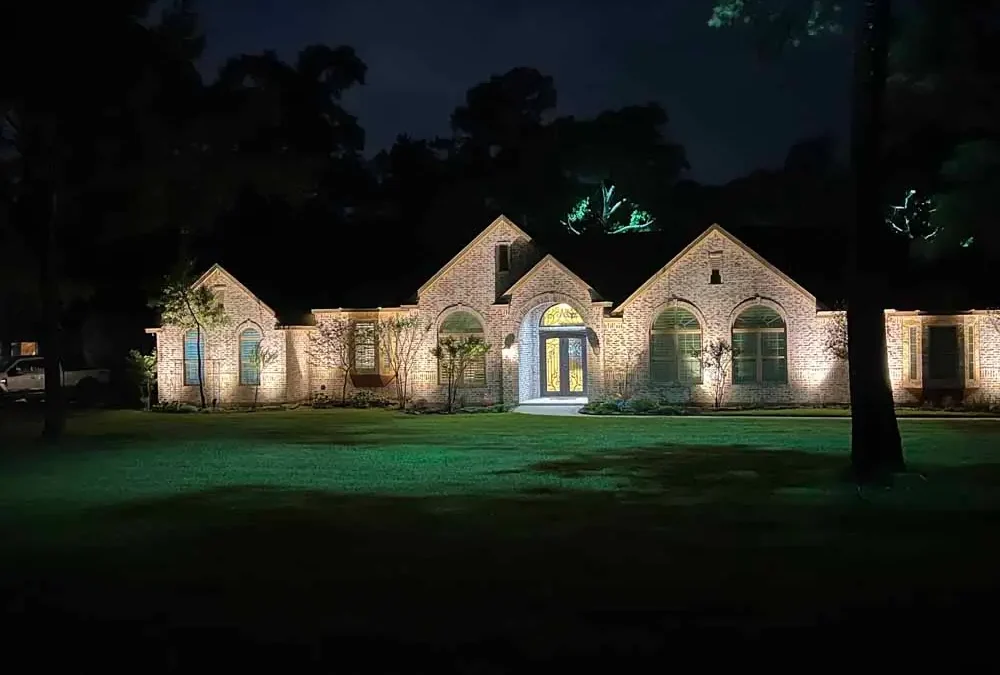
A good front yard design might bring out the brick, stone, columns, roofline, and trees without lighting every surface. The eye needs some darker areas too. They create depth and keep the property from looking flat.
This type of project can stand on its own. It can also become the first part of a larger plan that later moves into the backyard.
Backyard Lighting Has to Work From Several Views
A backyard is often seen from more than one place.
You may view it through the kitchen windows, from the patio table, while standing at the grill, or from inside the pool. A fixture that looks fine from the back door may shine directly into someone’s eyes from a chair across the yard.
We walk through those views while planning the layout.
The practical areas come first. Steps need to be visible. Walkways need enough light for comfortable movement. Cooking areas need useful light near the work surface.
Then we look farther out. A softly lit tree, garden wall, or planting bed can give the yard depth. Without that layer, the patio may feel like a bright island surrounded by darkness.
Backyard projects often use several fixture types. That can raise the cost, but each light should have a reason for being there.
Mature Trees Change the Work
A large tree can carry much of an outdoor lighting design.
Lighting from the ground can show the trunk and lower branches. Fixtures placed higher in the tree can cast light down through the canopy. The second method is often called moonlighting. It can create soft shadows across lawns, walks, and patios.
The effect looks simple when it is done well. The installation is not.
The crew needs to reach a safe mounting point, run and secure the wire, position the fixture, and check the effect from below. Branches and leaves can block the beam. A light that is only a few inches off may miss the area it was meant to cover.
Tree size, access, height, and the number of fixtures all affect the price.
An Older Lighting System May Still Have Useful Parts
Many homeowners call us after living with an older landscape lighting system for years. Some lights work. Some do not. Other fixtures have shifted, dimmed, or disappeared behind new plant growth.
That does not always mean the entire system must be removed.
We inspect the transformer, wiring, connections, fixtures, and layout. Good equipment may be reused when it still fits the new plan. A solid transformer could support updated fixtures. Existing wire may serve part of the property if it is in good condition and reaches the right locations.
Other systems have been repaired many times with mixed parts and exposed connections. In that case, trying to preserve everything can leave the homeowner with the same service problems under a newer looking design.
The inspection tells us what is worth keeping.
Can the Work Be Done in Phases?
Yes, when the complete plan is considered early.
A homeowner might begin with the front elevation, entry, and walkway. The next phase could add the driveway and large trees. The patio, pool, and backyard can follow later.
We need to know about those later areas before sizing the transformer and planning the wire routes. A little room for expansion can make the next phase easier. It also helps the lighting feel consistent as the system grows.
Phasing is common on larger properties. It gives the homeowner control over the timing while keeping the work tied to one design.
Why Can Two Lighting Quotes Be So Different?
The proposals may include different work.
One company may quote fewer fixtures or cover a smaller area. The fixture materials may differ. One proposal may include new transformers and controls while another assumes the current equipment will stay. Tree mounting, long wire runs, aiming, and service after installation may also be handled differently.
Read the scope, not just the final number.
Ask which areas will be lit. Look at where each fixture will go and what it is expected to do. Confirm whether the price includes the transformer, wiring, controls, installation, aiming, and cleanup.
Also ask what happens after dark. Will the company return to make adjustments if a beam needs to move or a fixture needs to be aimed differently?
Outdoor lighting is judged at night. The job is not finished simply because every fixture turns on.
Frequently Asked Questions About Landscape Lighting Cost
Can I get a landscape lighting price over the phone?
We can discuss the type of project you have in mind, but a firm proposal usually requires a property visit. Photos do not always show distances, access problems, existing equipment, tree height, or the conditions between lighting areas.
Do larger homes always need more lights?
No. The architecture and the homeowner’s goals matter more than square footage alone. A large home with a simple front elevation may need fewer fixtures than a smaller home with several rooflines, columns, trees, and separate walkways.
Can I begin with the front yard?
Yes. Many homeowners complete the front first and add other areas later. Tell the designer about future plans before the first phase begins.
Can existing fixtures be moved?
Some can. Their condition, beam pattern, wiring, and new location determine whether moving them makes sense. We inspect each part before including it in the updated plan.
Does LED lighting cost less to operate?
LED fixtures generally use less electricity than older halogen fixtures that produce a similar amount of light. The actual operating cost depends on the size of the system, fixture wattage, and the number of hours it runs each night.
Will adding more lights improve the design?
Only when those lights fill a real need. More fixtures can create glare, flatten architectural details, and make the yard feel overly bright. Placement and aiming carry more weight than the fixture count alone.
Schedule a Lighting Consultation for Your Houston Home
The best way to understand the cost of landscape lighting is to walk the property with someone who designs and installs it.
Houston Lightscapes has served Houston area homeowners for more than 30 years. We design lighting around the home, the landscaping, and the way the family uses the property after dark.
Contact us to schedule a free consultation. Show us what feels too dark, what you want to highlight, and which outdoor spaces you use most. We will explain the options and prepare a plan for your property.
Houston Lightscapes

The team at Houston Lightscapes takes pride in their many years of experience in the landscape lighting industry. They've been serving the greater Houston area for over 30 years bringing innovation and elegance to their designs. Learn more about Houston Lightscapes here.